 Wonders of
 Zaghouan, where the water that supplied Carthage began
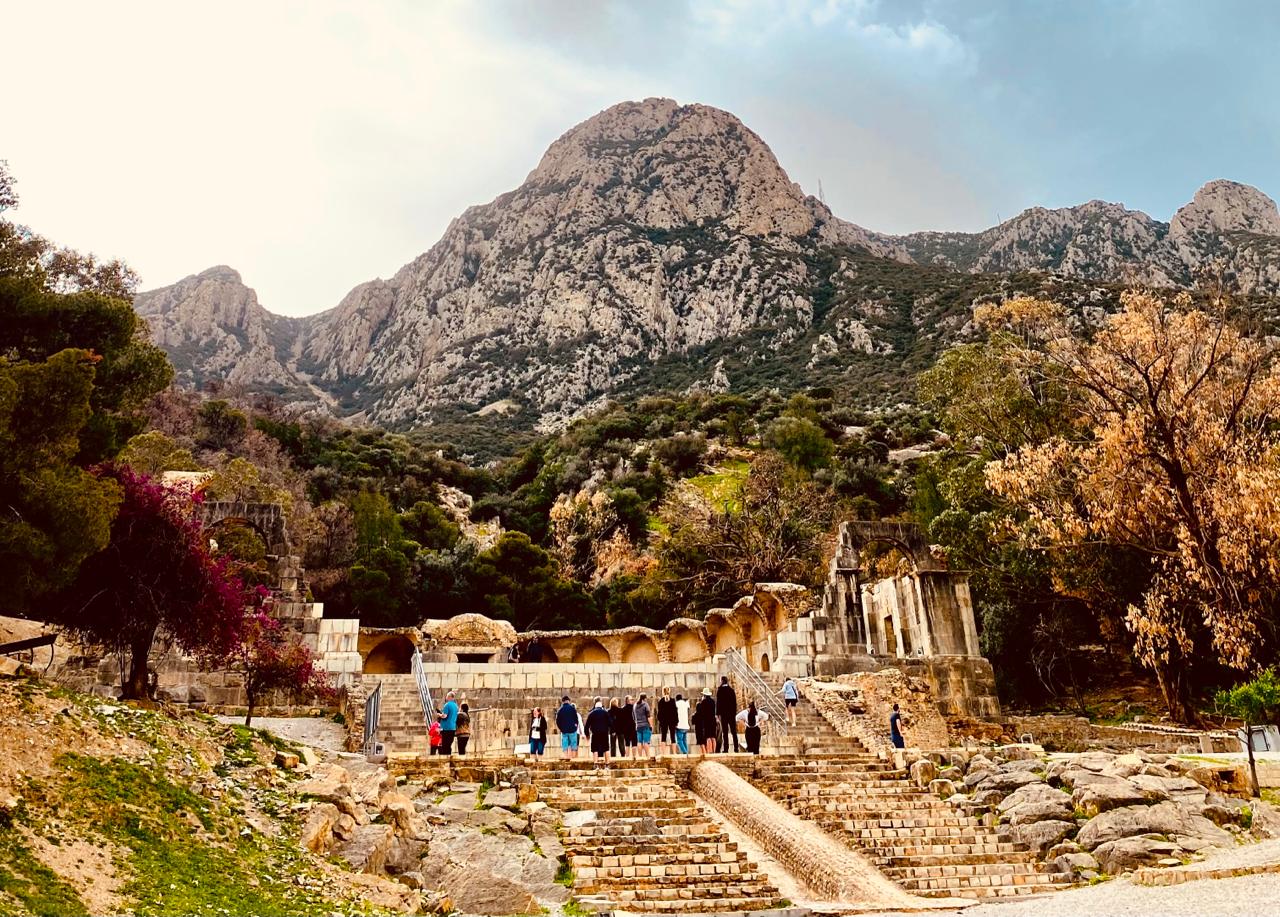
At the foot of Djebel Zaghouan, a mountain that rises to 1,295 metres and has been held sacred since antiquity, a powerful spring comes out of the rock. The Romans built a circular, colonnaded temple around it, the Temple of the Waters, inaugurated under the emperor Hadrian in the 2nd century. This was the starting point of a 132 kilometre aqueduct, one of the longest in the Roman Empire, which supplied Carthage with drinking water. Today Zaghouan is a quiet little town of cobbled lanes, surrounded by forests and springs, where people come for cooler air in summer and for walking in spring.
The essentials
| Where | Zaghouan governorate, north-east Tunisia |
| Ancient name | Ziqua |
| Altitude | Around 300 m (the town), 1,295 m (Djebel Zaghouan) |
| Temple of the Waters | Built under Hadrian, around 130 AD |
| Time needed | 1 h 30 to 2 h (Temple of the Waters and town) |
| From Sousse | About 1 h 45 by road |
Why the Romans built an aqueduct here
Carthage, the capital of Roman Africa, had several hundred thousand inhabitants in the 2nd century. The Baths of Antoninus, among the largest in the Empire, needed water on an enormous scale. Cisterns and wells were no longer enough. What the city needed was a permanent source that could deliver water all year round.
Roman engineers settled on the springs of Djebel Zaghouan, about 60 kilometres from Carthage as the crow flies. The flow was generous, somewhere around 20,000 cubic metres a day, and the spring never ran dry, not even in summer. The choice made itself.
That left the small matter of building an aqueduct able to cross valleys, hills and plains over roughly 132 kilometres, following the contour lines. The water had to run downhill by gravity alone, on a steady gradient of about 0.07% along the entire route. For the period, it was a remarkable piece of engineering.
The Temple of the Waters, sanctuary and reservoir
The Temple of the Waters lies a few kilometres from the centre of Zaghouan, at the foot of the mountain where the springs emerge. Hadrian had a circular sanctuary built there, ringed by twelve niches holding statues, probably the deities of the months of the year. At the centre, the spring came out of a shaped cave, and the water was collected in a monumental basin before being fed into the aqueduct.
Today you can still see the foundations of the temple, the niches cut into the hillside and part of the catchment basin. The columns have gone, most likely reused in later buildings, but the overall structure is easy enough to read. The water still flows, clear and cold, and it still supplies part of the region.
A sacred place before the Romans
The springs of Djebel Zaghouan were already venerated long before the Romans arrived. Berbers and Carthaginians treated the place as sacred and held rituals there. By building a monumental temple around the springs, Hadrian gave a local cult a Roman face while making Rome's control over natural resources perfectly clear.
The Carthage aqueduct, 132 kilometres of stone
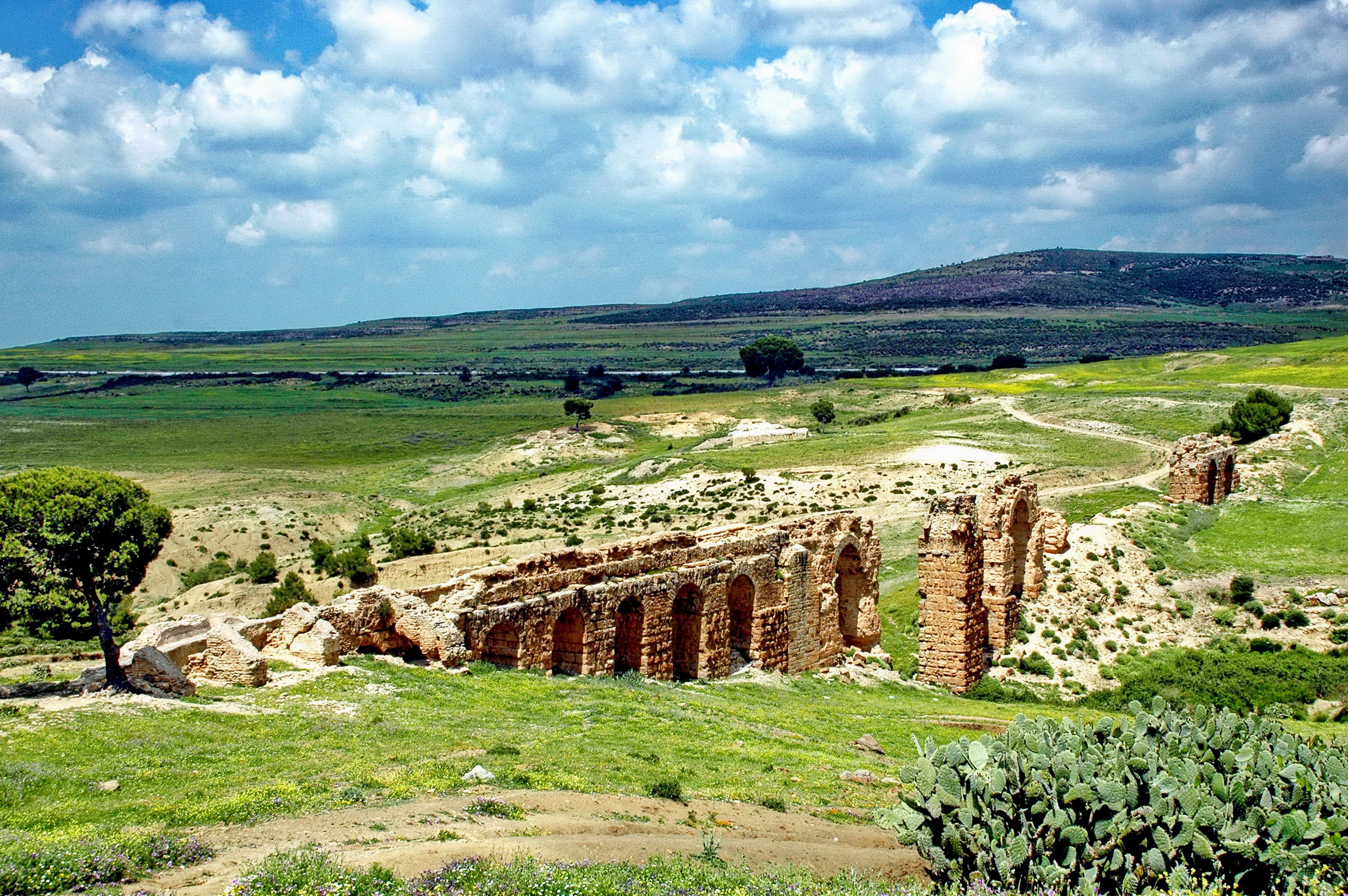
The aqueduct started at the Temple of the Waters and followed a winding course through mountains, plains and valleys all the way to Carthage. The water ran in a covered stone channel about 60 centimetres wide and 1.20 metres high. Wherever the ground dropped away, the aqueduct was carried on arches, some of them several metres high.
Whole sections of the aqueduct can still be seen in the Tunisian countryside. The most striking arches stand near Oued Miliane and Mohammedia, north of Zaghouan. You can follow the line of stone piers that carried the channel, some still capped by their original arches.
Upkeep and repairs
An aqueduct of that length needed constant maintenance. Teams of slaves and workmen patrolled the route, repaired leaks, scraped off limescale and chased out any animals that wandered into the channel. Inscriptions found on some stretches record the names of the teams responsible for each section.
The aqueduct worked for several centuries, until the Roman Empire fell apart and Carthage with it. Once the city was abandoned, the aqueduct went unmaintained and the raised sections gradually collapsed.
Zaghouan today
Zaghouan is a small town of about 20,000 people, built into the mountainside. Its cobbled lanes zigzag uphill between white houses with doors painted blue or green. The air is cooler than down on the plain, and people farm the terraces with olive, almond and pomegranate trees.
Roses and flower waters
Zaghouan is known for its rose water and orange blossom water, distillates used in pastry, in cosmetics and in mint tea. In spring the fields of wild roses and bitter orange trees are heavy with scent, and the small family distilleries run flat out.
Walking through the medina you pass shops selling these flower waters by the bottle, along with soaps and scented oils. It is one of the few places in Tunisia where the craft has survived on this scale.
The market and the central fountain
The centre of Zaghouan is built around a monumental arcaded fountain from the 19th century, fed by the springs on the mountain. The water runs non-stop, and local people come to fill their containers. The weekly market is held nearby, lively and colourful, with stalls of vegetables, fruit, spices and local produce.
Walking on Djebel Zaghouan
Djebel Zaghouan has several walking routes, from easy strolls to proper climbs. The summit, reachable in roughly two to three hours on foot, gives you a panoramic view over the plain of Tunis to the north, the Sahel to the east and the Dorsale mountains to the south. The path goes through Aleppo pine forest, rocky stretches and cold water springs.
In spring the mountain fills with wild flowers, pink rock roses, yellow broom and lavender. That is the best time to walk, with mild temperatures and the vegetation at its fullest. In summer the heat makes the climb hard going, and in winter the summit sometimes has snow on it.
Visiting tips
- Allow about two hours. An hour for the Temple of the Waters and an hour to wander the medina and see the fountain.
- Wear comfortable shoes. The lanes of the medina are cobbled and steep, and sometimes slippery.
- Come in spring. March, April and May are the best months, with mild temperatures and everything in flower.
- Bring a camera. The Temple of the Waters, the aqueduct arches out in the countryside and the lanes of the medina all photograph beautifully.
- Try the local specialities. Pastries scented with rose water and dishes made with wild herbs are worth seeking out.
Getting there
Zaghouan lies about 60 kilometres south of Tunis and 100 kilometres north of Sousse, reached by the GP3 national road. The drive from Sousse takes about an hour and three quarters, and under an hour from Tunis. The town is also served by louages, the Tunisian shared minibuses, from Tunis and other towns in the north.
We include Zaghouan in our Grand Heritage Tour, which pairs the Temple of the Waters with other Tunisian heritage sites such as Dougga and Bulla Regia. The tour lets you see the north of the country with an English-speaking guide, without having to sort out the transport yourself.
Common questions
Yes. Well-preserved sections of the aqueduct stand in the countryside between Zaghouan and Tunis, in particular near Mohammedia and Oued Miliane. Some of the arches are several metres high and genuinely impressive.
The foundations, the niches cut into the rock and part of the catchment basin are still there. The columns have gone, but the overall structure makes the layout of the sanctuary easy to follow.
Yes, the paths are marked and regularly used. The summit is within reach of anyone used to walking. Take water and walking shoes, and set off early in the morning in summer.
Half a day is enough for the Temple of the Waters, the medina and the central fountain. If you want to walk or explore the surroundings, set aside a full day.
Yes, there are several restaurants and cafés in the town centre serving traditional Tunisian food. Dishes made with wild herbs and scented pastries are typical of the region.
See Zaghouan with us
The Temple of the Waters, the Roman aqueduct, Dougga and other Tunisian heritage sites. Tour with an English-speaking guide, transport and entrance fees included.
See the Grand Heritage Tour → Map of places to visit