 Wonders of
 Kesra, a Berber village clinging to the mountain
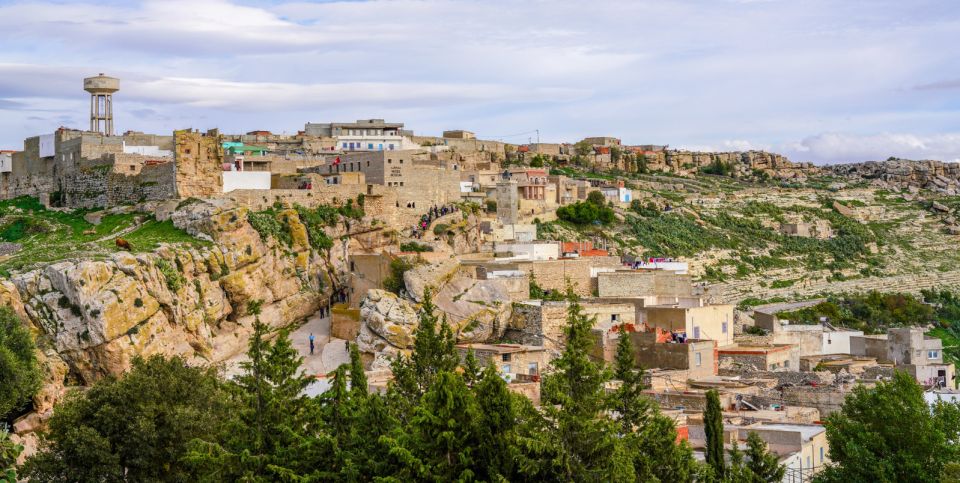
The road climbs, turns, and the village suddenly appears, as if set down on a rocky ridge. Kesra is one of the highest villages in Tunisia, hanging off the side of Djebel Kesra in the Siliana region, between 1,000 and 1,100 metres above sea level. Dry stone houses, lanes that climb in steps, terraces of olive and fig trees, and a view that runs all the way to the plain. You are a long way here from the Tunisia of the beach resorts, well off the tour circuits, and in touch with something rare: a Berber village where the Amazigh language and traditions are still alive.
The essentials
| Where | Djebel Kesra, Siliana governorate, north-west Tunisia |
| Berber name | Kesra (قصرة), literally "fortress" |
| Altitude | Around 1,000 to 1,100 metres |
| Population | A few hundred permanent residents |
| Time needed | 2 to 3 hours including a walk |
| From Sousse | About 2 h 30 by road |
A village held in place by time
Kesra is not a museum village. People live here, work their land and keep sheep. But the architecture has barely changed in centuries. The houses are built from local stone, often without mortar, with thick walls and small openings to hold the cool in summer and the warmth in winter.
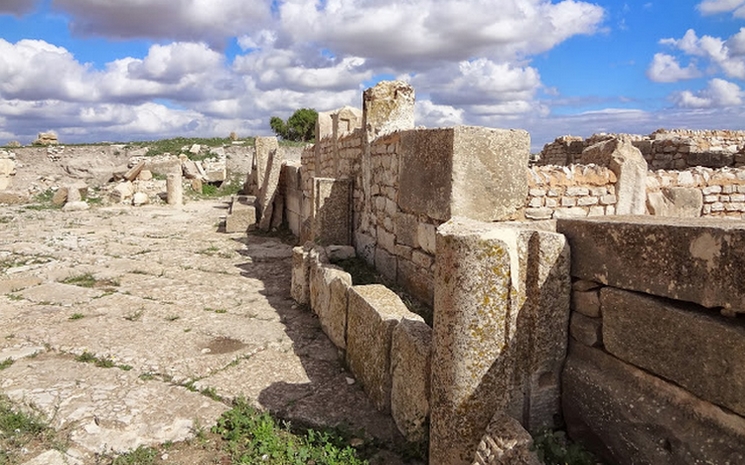
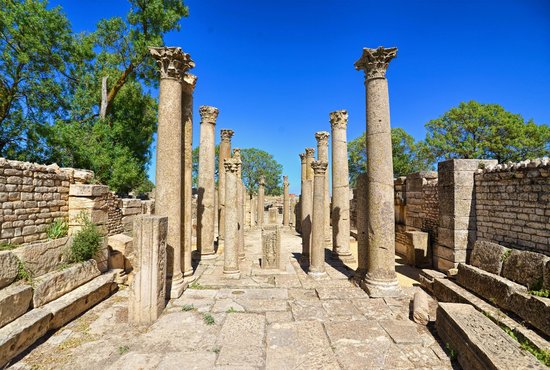
The old village is a maze of cobbled lanes, some so narrow that two people cannot pass side by side. You come across studded wooden doors and niches cut into the walls. And everywhere, reused stone: fragments of Roman columns built into the houses. Kesra stands on the remains of antiquity.
A living Berber language
What really sets Kesra apart is that the Amazigh language is still spoken here day to day, above all by the older generation. Tunisia today is overwhelmingly Arabic-speaking, but in a few mountain villages, Kesra among them, Berber has survived. You hear it in the lanes, at the market, between neighbours.
Younger people usually speak both Arabic and Berber, and sometimes a little French. That double identity is a real asset, but it remains fragile in the face of rural depopulation and cultural uniformity.
What you see, and what you feel
The old village and its lanes
The best way to see Kesra is to get lost in it. There is no marked route and no ticket office, just a village you walk into on foot. You climb the stone steps, follow the vaulted passages, and come out onto a small square. People here are used to visitors and most of them are welcoming.
The springs and the waterfalls
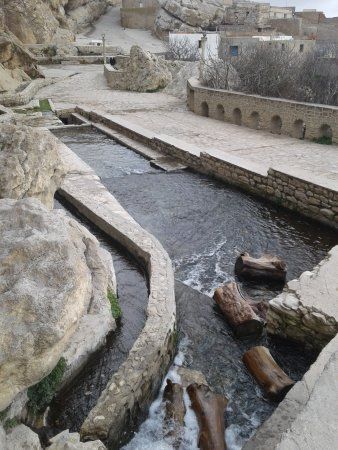
Djebel Kesra is a wet mountain. Springs come out of the cliff face, and in winter or spring, after the rains, waterfalls drop down the rocks. That is rare in Tunisia, and it is what made it possible to live up here in the first place. The water is channelled down to the farming terraces below, where olives, figs, almonds and a few vegetables grow. The irrigation system is old, probably Roman in origin, and still in use.
The view over the plain
From the top of the village the view is huge. You look out over the whole Siliana plain, dotted with olive trees and cereal fields, with mountains behind. On a clear day you can see for tens of kilometres. It is also a strategic position, which is why the site was fortified as far back as antiquity.
The walking routes
For anyone who likes walking, Kesra makes an excellent base. Paths lead from the village up to the ridges and down to the springs below. A local guide is worth having if you want to get beyond the obvious routes.
A village that lives by the seasons
Winter at Kesra can be harsh. Snow falls some years. Spring arrives in a burst of colour, with the almond trees in blossom and the waterfalls full. Summer days are hot but the nights stay cool. Autumn is the olive and fig harvest.
Practical advice
- Walking shoes are essential. The lanes are cobbled, steep and sometimes slippery.
- Respect people's privacy. Ask before taking photographs and keep a low profile.
- Best time to go: spring or autumn. Winter can be cold and summer dry.
- What to bring: a jacket, water and a snack. There are very few shops.
Getting there
Kesra sits in the mountains of the north-west, about 2 h 30 by road from Sousse, going via Kairouan and then Siliana. From Tunis, allow around two hours. The road climbs steadily and the last few kilometres are twisty. There is no regular tourist transport.
We include Kesra in some of our Grand Heritage Tour itineraries, often combined with Makthar or Dougga.
Common questions
A few guesthouses run by local families offer simple, clean rooms. The welcome is warm. Book ahead, especially at weekends.
A few small local eateries serve simple dishes, and some guesthouses cook meals to order. The food is local and excellent: couscous, chorba, home-baked bread and olive oil from the village.
No. Plenty of people here speak French. A smile and a bit of goodwill will get you a long way.
Yes, the road is surfaced and in good condition. A standard car will manage it without trouble, except in winter when there is snow.
Kesra goes well with Makthar or Dougga. The Djebel Serj national park nearby has some fine walking.
Visit Kesra with us
A Berber mountain village, old stone lanes and living Amazigh culture. Included in our Grand Heritage Tour, departing from Sousse or Hammamet.
See the Grand Heritage Tour → Map of places to visit