 Wonders of
 Chenini, the Berber village that clings to the mountain
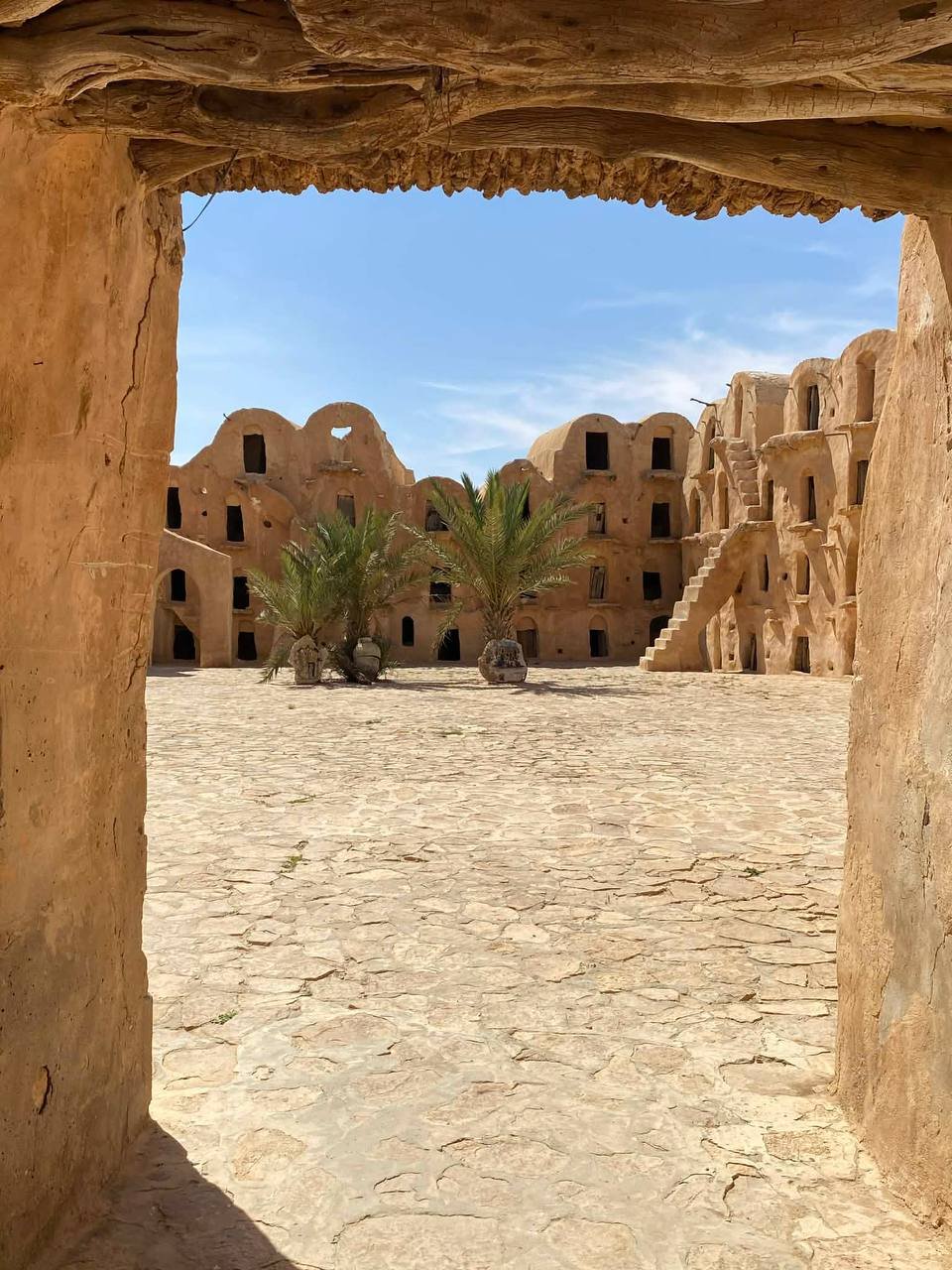
From a distance Chenini looks like a pale smudge along the top of a rocky ridge. Get closer and you start to make out houses, granaries and stepped paths running up the slope. It is a fortified Berber village, built high up to watch over the region and keep attackers out, near Tataouine in southern Tunisia. A place where the architecture merges into the rock and very little seems to have changed.
The essentials
| Where | Southern Tunisia, about 18 km from Tataouine |
| Berber name | Šinīn |
| Altitude | About 500 metres |
| Type of site | Fortified Berber village, ksar and fortified granaries |
| Time needed | 1 hr 30 to 2 hrs (walking included) |
| From Sousse | About 5 hrs by road |
Why build a village high on a ridge
In the mountains around Tataouine, in the south of Tunisia, Berber communities lived for centuries in hilltop villages known as ksour (the plural of ksar). These villages were built on ridges and high ground for two reasons: to watch the surrounding country and spot trouble early, and to defend against raids by nomadic tribes or bandits.
Chenini is one of the best preserved examples of this kind of architecture. The village is built on several levels along a mountain spine. The houses and granaries (ghorfas) are either cut straight into the rock or built from local stone, in an ochre tone that blends into the landscape.
The fortified granaries stored the harvest (barley, wheat, dates, olive oil) along with each family's valuables. They were closed with thick wooden or stone doors, and some could only be reached by ladders that were pulled away at the first sign of danger.
The climb to the upper village
A visit to Chenini usually starts in the lower village, where a few houses are still occupied and there is a small square. From there you go up on foot, along narrow paths and steps cut into the rock. The climb is not long, about 20 to 30 minutes, but it is steep in places.
On the way you pass through lanes that run under stone vaults, walk past abandoned granaries with broken-in doors, and now and then meet someone coming down with a sack or a goat. The atmosphere is hard to pin down: the place feels lived in and frozen in time at the same time.
The upper village and the granaries
The higher you go, the older and more ruined the buildings become. Many of the houses in the upper village are abandoned, their roofs collapsed, their walls worn down by the wind. But the structures are still easy to read, and you can see clearly how the village worked: granaries stacked one above the other, narrow passages that were easy to defend, thick walls built to take an assault.
Some of the granaries have been restored and opened to the public. You can step inside and see the small vaulted cells where each family kept its stores. The interiors are cool and dark, and they smell of old stone.
The white Mosque of the Seven Sleepers
At the top of the ridge stands a small white mosque, visible from a long way off. This is the Mosque of the Seven Sleepers, a place wrapped in legend. Local tradition holds that seven young men took refuge in a cave in the mountain to escape persecution, fell asleep, and woke only centuries later. The story echoes the Quranic account of the people of the cave (Surah Al-Kahf).
The mosque itself is modest, but the site is respected and pilgrims still come. The main draw is the view: from the forecourt you can see the whole surrounding landscape, the dry mountains, the valleys, and in the distance the first edges of the desert.
The view from Chenini
This is one of the highlights of the visit. From the top of the village you get a 360-degree view over the Tataouine region. The landscape is bare and almost lunar: rocky hills, dry valleys, a few clumps of olive trees and dwarf palms. On a clear day you can pick out other villages perched on the neighbouring ridges.
It is also the best place to understand why these villages were built so high. From up there, you see anything coming a long way off. No caravan and no group of armed men could get close without being spotted.
Berber life in Chenini
Chenini is still partly inhabited. A few families live in the lower village, and some of the older residents still climb up regularly to look after the houses in the upper village or spend the day there. People speak Berber (Tamazight) as their first language, and many speak little or no French and almost no English.
The traditional way of life has changed, but some of it carries on. You will still see clay bread ovens, olive oil jars and hand-woven Berber rugs. Some of the women wear traditional dress, and hospitality is still central to the local culture.
If you visit Chenini with a guide, he can introduce you to residents who are happy to receive visitors at home. It is a rare chance to exchange a few words, drink a glass of tea and learn more about the Berber language and customs of the region.
Tips for your visit
- Wear closed walking shoes. The ground is stony, the steps are uneven, and some stretches are steep.
- Bring water. There is nowhere to buy drinking water at the top of the village, and the climb can be hot in summer.
- Allow time to go up and come back down. The full visit including the climb to the top takes about 1 hr 30 to 2 hrs.
- Treat the place with respect. Chenini is not an abandoned village: people live here and it is also a place of worship. Do not go into closed houses, and keep a low profile near the mosque.
- Go with a local guide. He can tell you the history of the village, point out details in the architecture, and may be able to introduce you to residents.
Chenini and the other ksour in the region
Chenini is one of a group of fortified Berber villages around Tataouine. Others are worth the detour, among them Douiret (a spectacular ruined village), Ksar Ouled Soltane (a fortified granary several storeys high) and Ksar Hadada (a Star Wars filming location). If you have the time, a two-day tour lets you see several of these sites and get a proper sense of Berber architecture in southern Tunisia.
Frequently asked questions
Partly, yes. A few families still live in the lower village. The upper village is largely abandoned, but some families still go up regularly to look after their houses or granaries.
Anyone in normal physical shape can manage it, but it is steep in places. Allow 20 to 30 minutes for the climb, on stone steps that are sometimes uneven. Good shoes and water are worth having.
The inside of the mosque is for Muslims only, as with every working mosque. You can still walk up to the outside and enjoy the view from the forecourt. The site is respected locally, so modest clothing is expected.
Late afternoon, about two hours before sunset. The light is soft, ideal for photographs, and it is cooler for the climb. Early morning also works well if you are covering several sites in one day.
Yes. Chenini is often part of a two-day tour taking in several of the region's ksour (Ksar Ouled Soltane, Douiret, Ksar Hadada), along with Matmata and sometimes Ksar Ghilane. We run this kind of tour from the coast.
Visit Chenini with us
A fortified Berber village, wide desert views and the ksour of southern Tunisia. Two-day tours from the coast, transport, guide and accommodation included.
See the Sahara 2 days excursion → Map of places to visit