 Wonders of
 Tabarka, the coral coast
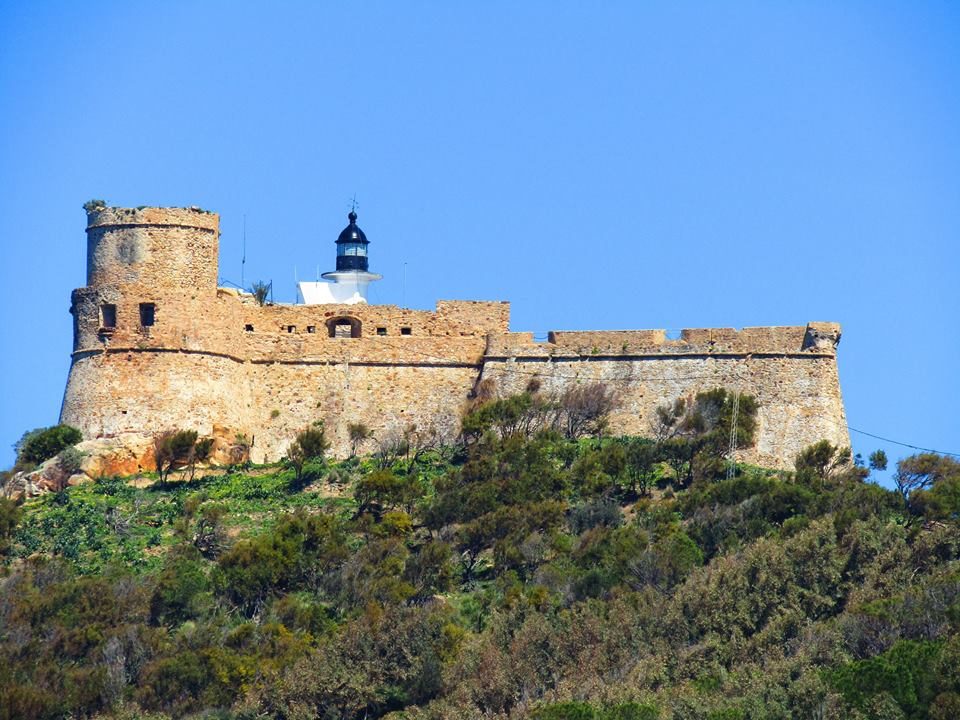
Tabarka sits at the far end of Tunisia's northwest, a few kilometres from the Algerian border, where the mountains drop straight into the sea. A Genoese fort in yellow stone stands on an islet connected to the shore, red sandstone needle rocks rise out of the water, and behind the town the Kroumirie cork oak forests stretch inland — the greenest region in Tunisia. For three centuries, Genoese families dived here to bring up red coral, the finest in the Mediterranean.
Key facts
| Where | Northwest Tunisia, Jendouba governorate, near the Algerian border |
| Known for | Mediterranean red coral, artisan jewellery |
| Genoese fort | 16th century, built by the Lomellini family |
| Elevation | Sea level (town), forests up to 800 m |
| Time needed | At least 1 day |
| From Sousse | About 4 hours by road |
| From Tunis | About 3 hours by road |
The Genoese fort and the coral trade
The story of Tabarka is inseparable from coral. In the 16th century, the Lomellini family of Genoa bought the island of Tabarka from the Bey of Tunis in exchange for a famous prisoner, the corsair Dragut. The Genoese built a massive fort and settled in to exploit the banks of red coral that covered the seabed.
For nearly two centuries Tabarka was a Genoese enclave on Tunisian soil. Divers went down dozens of metres, without equipment, to wrench coral from the rocks. Tabarka coral was prized across Europe for jewellery, rosaries and decorative objects. The trade was lucrative enough to justify maintaining a garrison and fortifications on a rock battered by waves.
In 1741 the Bey of Tunis recaptured the island. The Lomellini were expelled. Part of the Genoese population emigrated to Sardinia, founding Carloforte — a town that still speaks a Ligurian dialect. The fort remains, massive and silent, overlooking Tabarka bay.
Les Aiguilles — sandstone sculptures in the sea
West of Tabarka, a series of red sandstone rocks rise from the sea like carved columns. They are called Les Aiguilles — the Needles. Twenty to twenty-five metres tall, shaped by marine and wind erosion, they turn ochre, rust and gold depending on the light. At sunset the sight is striking. You can see them from the coastal road, or up close by boat.
The Kroumirie forests
Just behind Tabarka begins the Kroumirie, Tunisia's most wooded region. Cork oaks, zeen oaks and pines cover the mountains for tens of kilometres. The soil is red, the air is cool, springs are everywhere. The landscape is startling — you would think you were in Corsica or the Cévennes, not Tunisia.
Cork is still harvested. You see the stripped trunks, bright orange after bark removal, along the roads. Wildlife is rich: wild boar, jackals, raptors, and dense undergrowth with ferns, heather and cyclamens in spring.
Diving
Tabarka's seabed is among the richest in Tunisia. Posidonia meadows, groupers, moray eels, nudibranchs, and the famous red coral banks. Several dive clubs offer trips for all levels, from beginner baptisms in shallow water to deep dives on walls covered in sea fans.
Tabarka today
Tabarka has long hosted a well-regarded jazz festival, Tabarka Jazz, drawing musicians from around the world. The town also has an 18-hole golf course designed by Ronald Fream, one of the finest in North Africa, with a sea view. The marina, fresh-fish restaurants and compact town centre make Tabarka a pleasant stop, far from the crowds of the Sahel beach resorts.
Practical tips
- Best time: May to October for the sea and diving, spring for the forests.
- Pack a jacket for the evening, even in summer. Tabarka is cooler than the Sahel.
- Diving: book ahead in high season. Reputable clubs provide all equipment.
- Road: the drive from Tunis (GP7 then GP17) is winding through the mountains — allow extra time.
Frequently asked questions
Yes. Several workshops and shops sell Mediterranean red coral jewellery, cut and set locally. Check the origin and favour local artisans over resellers.
The fort can be visited from the outside and offers a superb view over the bay. Interior access depends on the period and ongoing restoration work.
May to October for the sea and diving. Spring (March–May) is ideal for forest walks in the Kroumirie, when everything is green and in flower.
Discover Tunisia with us
Tabarka is far from the Sahel, but our team knows the region well. Get in touch to plan your visit.
See our excursions → Map of places to visit