 Wonders of
 Kerkouane, the only intact Punic city in the world
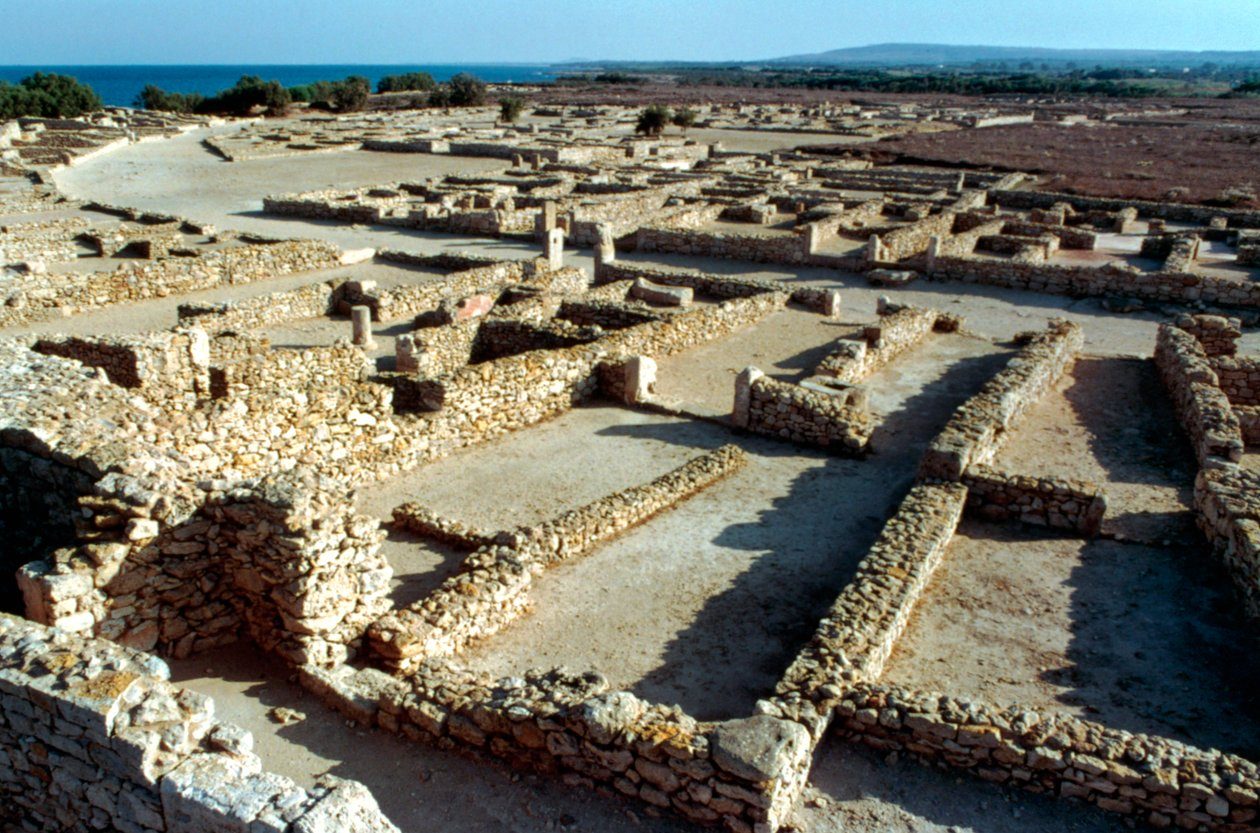
This is the only place on Earth where you can walk through the streets of a Carthaginian city. Everywhere else, the Romans rebuilt on top, burying the Punic layer under their own monuments. Kerkouane escaped that fate. Destroyed around 250 BC during the First Punic War, it was never reoccupied. Nobody came back. The streets, the houses, the workshops, the bathrooms with their hip-shaped bathtubs stayed as they were, frozen in Punic time. UNESCO listed it as a World Heritage Site in 1985 for precisely this reason: nothing comparable exists.
Key facts
| Where | Cap Bon peninsula, Nabeul governorate, northeast Tunisia |
| Status | UNESCO World Heritage Site (1985) |
| Period | 6th – 3rd century BC |
| Destruction | Around 250 BC (First Punic War) |
| Time needed | 1 h 30 to 2 hours (site + museum) |
| From Tunis | About 2 hours by road |
| From Sousse | About 3 hours by road |
Why Kerkouane is unique
Carthage itself was razed by the Romans in 146 BC, then rebuilt as a Roman city. The other Punic cities of North Africa — Utica, Hadrumetum, Leptis — met the same fate: the Romans built over them, and the Punic layer is buried, fragmentary, hard to read.
Kerkouane is different. It was a small coastal town on Cap Bon, destroyed by the Romans during the First Punic War around 256–250 BC. But unlike the others, it was never rebuilt. The site lay abandoned for more than two thousand years. When archaeologists discovered it in 1952, they found a complete town plan: streets laid out in a grid, blocks of houses, shops, workshops and sanctuaries.
Daily life frozen in stone
What strikes you at Kerkouane is the level of detail. You step into houses and see the room layout, the door thresholds, the water drainage channels, the floors of white and red tessera mosaic. Some houses have an atrium with a central basin to catch rainwater — a plan the Romans would later adopt.
The most famous detail is the bathrooms. Several houses contain bathtubs set into the floor, shaped like a seat or a hip, lined with a waterproof pink render. They are proof that the Carthaginians practised domestic hygiene at a level no one expected for the period.
The purple dye workshops
Kerkouane was also a centre for producing purple dye, the luxury colorant extracted from the murex, a sea snail. Dyeing workshops have been identified, with vats and residues of crushed shells. Phoenician purple — the deep violet of royal and priestly robes — was one of the most valuable products of the ancient world, and Kerkouane produced it.
The sign of Tanit and Punic religion
The sign of Tanit, the principal goddess of Carthage, appears everywhere on the site: a triangle topped by a disc and a crescent, carved into thresholds, stelae and amulets. Tanit was the protector of the city, associated with fertility, the moon and the sea. Her cult was central to Punic life, and Kerkouane bears witness to it better than any other site.
The necropolis and the Princess of Kerkouane
A few hundred metres from the urban site lies the necropolis, with tombs cut into the rock. The most famous discovery is a wooden sarcophagus lid depicting a woman, known as the "Princess of Kerkouane". The sculpture, astonishingly fine for Punic art, is now in the Bardo Museum in Tunis. A copy is displayed in the small on-site museum.
Visiting the site today
Kerkouane is an open site on the coast, on a rocky shore swept by the wind. The visitor path follows the ancient streets past the houses, workshops and baths. A small museum at the entrance displays objects found during excavations: pottery, jewellery, amulets, tools. The visit takes 1 h 30 to 2 hours.
The site is rarely crowded. It is a quiet, almost meditative place, with the sound of the sea in the background and low ruins that let your gaze run to the horizon. The emotion comes from the awareness of what you are looking at: the only visible Punic town plan in the world.
Practical tips
- Paid entry with photography permit. Around 8 dinars.
- No shade. Hat and water are essential, especially in summer.
- Wind. Cap Bon is breezy. Bring a jacket even on sunny days.
- Combine with El Haouaria and Kélibia, other Cap Bon sites.
Frequently asked questions
Absolutely. Kerkouane is irreplaceable — there is nowhere else in the world where a Punic city is visible. Cap Bon also has fine beaches, El Haouaria and its caves, and Kélibia with its fortress.
Allow 1 h 30 to 2 hours for the archaeological site and the museum. A guide makes the visit far more vivid.
Punic pottery, jewellery, amulets, everyday tools and a copy of the Princess of Kerkouane. Small but essential for understanding what you see outside.
Discover Tunisia with us
Kerkouane is a unique site, an irreplaceable witness to Carthaginian civilisation. Get in touch to plan your visit.
See our excursions → Map of places to visit