 Wonders of
 Kairouan, the fourth holiest city in Islam
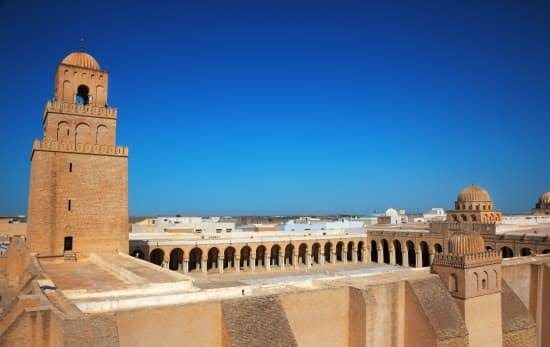
Kairouan hits you the moment you walk in. Ochre ramparts, a minaret that towers above everything, shaded lanes, and the smell of sandalwood and makroudh drifting from the souks. Founded in 670 AD by the Arab general Oqba Ibn Nafi, it was the first Muslim city in the Maghreb and is the fourth holiest city in Islam, after Mecca, Medina and Jerusalem. Tradition says that seven pilgrimages to Kairouan equal one to Mecca. The whole city has been a UNESCO World Heritage site since 1988.
Key facts
| Where | Central Tunisia, Kairouan governorate |
| Founded | 670 AD by Oqba Ibn Nafi |
| Status | UNESCO World Heritage (1988) |
| Population | Around 120,000 |
| Visit time | 3 hours to half a day |
| From Sousse | About 1 hour by road (60 km) |
The founding: how it all started
In 670, the Umayyad general Oqba Ibn Nafi, tasked with conquering Ifriqiya, needed a site for a permanent military base. He chose a plain inland, away from the coast and its Byzantine raids, midway between the mountains and the steppe. That is where he founded Kairouan — a name that comes from the Arabic for "caravan" or the Persian for "camp".
The camp became a city. Then a capital. Under the Aghlabids (9th century), Kairouan reached its peak as the intellectual, religious and commercial centre of the entire Maghreb. Scholars, jurists and craftsmen flocked to it. Its influence extended to Andalusia and sub-Saharan Africa.
The Great Mosque: the oldest place of worship in the Maghreb
The Great Mosque of Kairouan, also known as the Mosque of Oqba, is the founding monument of Islam in North Africa. Built in 670 when the city was established, it was rebuilt and enlarged several times, most notably under the Aghlabids in 836, when it took its present form.
The building impresses through its simplicity and proportions. The prayer hall has 414 columns salvaged from Roman and Byzantine sites across Tunisia. No two are alike: Corinthian capitals, pink marble shafts, grey granite. The minaret, 31.5 metres tall, is the oldest standing minaret in the world. Its square, massive form influenced mosque architecture across the Maghreb and Andalusia.
The courtyard is vast, paved in marble, with a sundial and underground cisterns. Non-Muslims may visit the courtyard and admire the architecture, but the prayer hall is reserved for worshippers.
The Aghlabid Basins
Outside the ramparts, the Aghlabid Basins testify to 9th-century hydraulic ingenuity. Two communicating circular reservoirs, the larger one 128 metres in diameter and nearly 5 metres deep, collected water brought by aqueduct from surrounding hills. The water was settled in the smaller basin, then stored in the larger one.
This system supplied a city of over 100,000 people in a semi-arid zone. It was still working in the 11th century. Today the basins are restored and open to visitors. At sunset, the light on the water is something you won't forget.
The medina and its souks
The medina of Kairouan is a labyrinth of covered lanes, courtyard houses and studded doors. It is less touristy than Tunis or Sousse, and easy to get lost in. This is where you find the craftsmen: hand-knotted carpets (Kairouan is Tunisia's carpet capital), chased copper, turned wood, leather.
Makroudh — a semolina cake stuffed with dates and fried in oil — is the unmissable local speciality. Every family has its own recipe. If you try only one, get it from the vendors on Rue Habib Bourguiba, at the edge of the medina.
The Mausoleum of the Barber (Sidi Sahbi)
The Sidi Sahbi mausoleum, nicknamed "the Barber", is a cluster of courtyards, galleries and rooms decorated with polychrome tiles and carved stucco. It houses the tomb of Abou Zamaa el-Balaoui, a companion of the Prophet said to have carried three hairs from his beard. The place is calm, shaded, and the Ottoman-era architecture is exquisitely detailed.
Practical tips
- Dress code for the mosque: shoulders and knees covered.
- Best time: October to April. Summer is very hot (40 °C and above).
- Combined ticket: a single ticket covers the mosque, the basins and the mausoleum.
- Bring: hat, water and sunscreen in summer.
How to get there
Kairouan is about an hour from Sousse by road. From Tunis, allow two hours. The city is well served by louages (shared minibuses) and buses. On an organised excursion, Kairouan is often combined with El Jem in the same day.
Frequently asked questions
Yes. The courtyard and outer galleries are open to everyone. The prayer hall is reserved for Muslims. The courtyard visit is more than enough to appreciate the architecture.
October to April. Summer months are stifling, with temperatures regularly exceeding 40 °C. Spring is ideal.
Yes, it is a classic combination. El Jem is about an hour from Kairouan. Many of our excursions include both.
It really is. A simple cake, but when it is fresh and well made, the semolina is crisp and the date paste melts inside. Not to be missed.
Visit Kairouan with us
Fourth holiest city in Islam, the Great Mosque, souks and makroudh. Often combined with El Jem on our excursions from Sousse or Hammamet.
See the El Jem excursion → Map of places to visit