 Wonders of
 Djerba, the island of a thousand faces
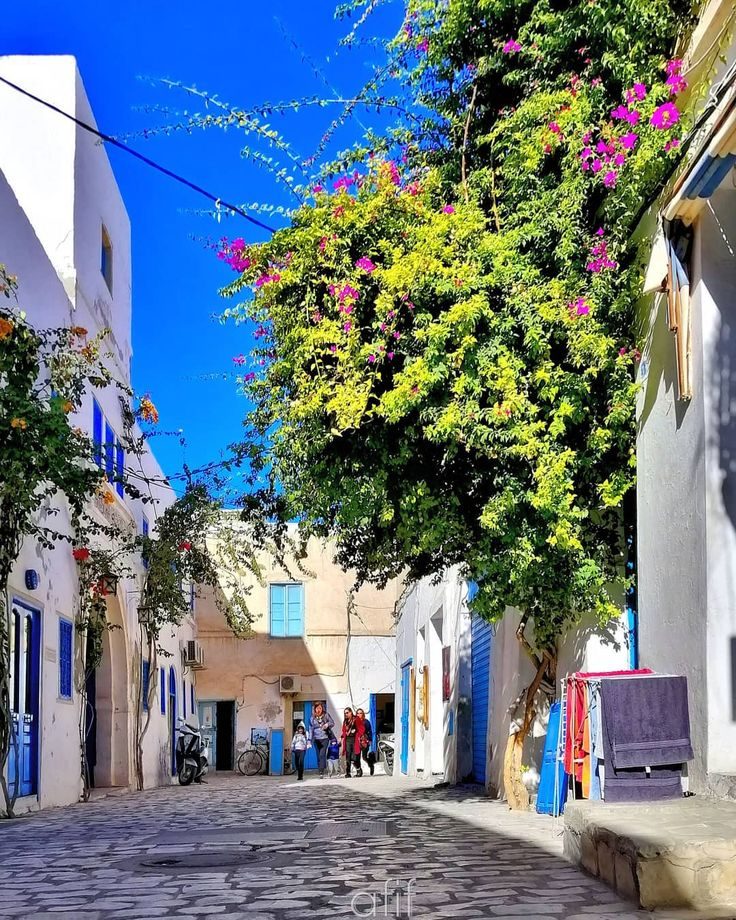
Djerba is the largest island in North Africa, and probably the most surprising. People come for the beaches and stay for everything else: a thousand-year-old synagogue, a souk that smells of leather and spices, lanes covered in street art, potters who work as they did five centuries ago, and a light that painters have always sought. Linked to the mainland by a Roman causeway still in use, Djerba is a world apart, where Muslims, Jews and Berbers have lived side by side for centuries.
Key facts
| Where | Southeast Tunisia, Gulf of Gabès |
| Area | About 514 km² |
| Population | About 160,000 |
| Main town | Houmt Souk |
| Mythology | Island of the Lotus Eaters (Homer's Odyssey) |
| From Sousse | About 6 hours by road (or fly to Djerba-Zarzis) |
History and mythology
In the Odyssey, Homer tells how Odysseus and his men landed on the island of the Lotus Eaters, where those who tasted the lotus forgot everything and never wanted to leave. The ancients identified that island with Djerba, and you can see why — it is hard to leave such a gentle place.
The real history is every bit as rich. Phoenicians, Romans, Vandals, Byzantines, Arabs, Sicilian Normans, Spaniards, Ottomans — all passed through Djerba. Each left something behind: pottery shards, fortifications, building techniques, genes. The El Kantara causeway, linking the island to the mainland over 6 kilometres, is Roman in origin, restored several times since.
Houmt Souk, the heart of the island
Houmt Souk is the capital of Djerba. It is a merchant town, with a covered souk selling silver jewellery, fabrics, leather, ceramics and spices. The fondouks — those old caravan inns with interior courtyards — have been turned into craft shops or cafés, and are one of the town's architectural charms.
The fishing port is the other draw. You see the colourful boats of the sponge fishermen, a trade that made the island wealthy for centuries. The Borj el Kebir, a 15th-century Ottoman fortress, overlooks the port and is worth visiting for the view.
El Ghriba, a synagogue across millennia
The El Ghriba synagogue is one of the oldest Jewish places of worship in the world. Tradition places its founding in the 6th century BC, after the destruction of Solomon's Temple. The present building dates from the 19th century, but the site is steeped in memory. Every year a pilgrimage brings Jews from around the world, in an atmosphere that is both solemn and festive.
The Jewish community of Djerba is one of the oldest and most vibrant in the Arab world. A few hundred people still live there, notably in the village of Hara Sghira, practising their religion and traditional trades — goldsmithing, jewellery — in peaceful coexistence with the Muslim population.
Guellala and Djerbahood
Guellala, on the south coast, is the potters' village. Since antiquity, pottery has been made here from local clay: jars, dishes, oil lamps. The workshops are still running, and you can watch the craftsmen throw and fire their pieces in traditional earthen kilns.
At the other end of the spectrum, the village of Erriadh was turned into an open-air museum by the Djerbahood project. In 2014, more than 150 street artists from around the world painted the village walls. The result is an unlikely mix of calligraphy, giant murals and colourful tags laid over centuries-old whitewashed walls. It has become one of the most photographed sights in Tunisia.
Beaches and sea
The northeast coast of Djerba, around Sidi Mahrez and Seguia, has fine-sand beaches and clear water. This is where the hotels and resorts are concentrated. The south coast is wilder, with coves and less crowded beaches.
Djerba is not an island of mountains or cliffs — the terrain is flat, covered with olive trees, palms and prickly pears. The charm comes from the light, the mild climate and that island feeling where time seems to slow down.
Practical tips
- Getting around. Rent a vehicle. The island is small but the sights are spread out. Taxis exist but are impractical for a day of sightseeing.
- Visiting El Ghriba. The synagogue is open to visitors outside prayer times. Modest dress required.
- Best season. April to June and September to November. Summer is hot but bearable thanks to the sea breeze.
- Bargaining. At the Houmt Souk market, it is the rule. Start at a third of the asking price and work up.
Getting there
Djerba has an international airport (Djerba-Zarzis) with direct flights from Europe. By car from Sousse, allow about 6 hours via Sfax and Gabès. You reach the island by the El Kantara Roman causeway (south side) or by ferry from Jorf (mainland) to Ajim (island), a 15-minute crossing.
Frequently asked questions
Yes, if you are looking for more than beaches. Djerba offers a cultural, religious and craft heritage unique in Tunisia. It is an island with a strong identity, not just a seaside resort.
Yes, it is open to visitors of all faiths outside prayer hours. Security measures are in place at the entrance. The visit is free.
The airport receives direct flights from Europe. From mainland Tunisia, shared taxis (louages) leave from Gabès and Médenine. The ferry between Jorf and Ajim is a scenic option.
Discover Tunisia with us
Our excursions from Sousse, Monastir, Mahdia and Hammamet take you to the finest sites in the country, north to south.
See our excursions → Map of places to visit